HASH Developer Blog
Stories and guides from developers in the community
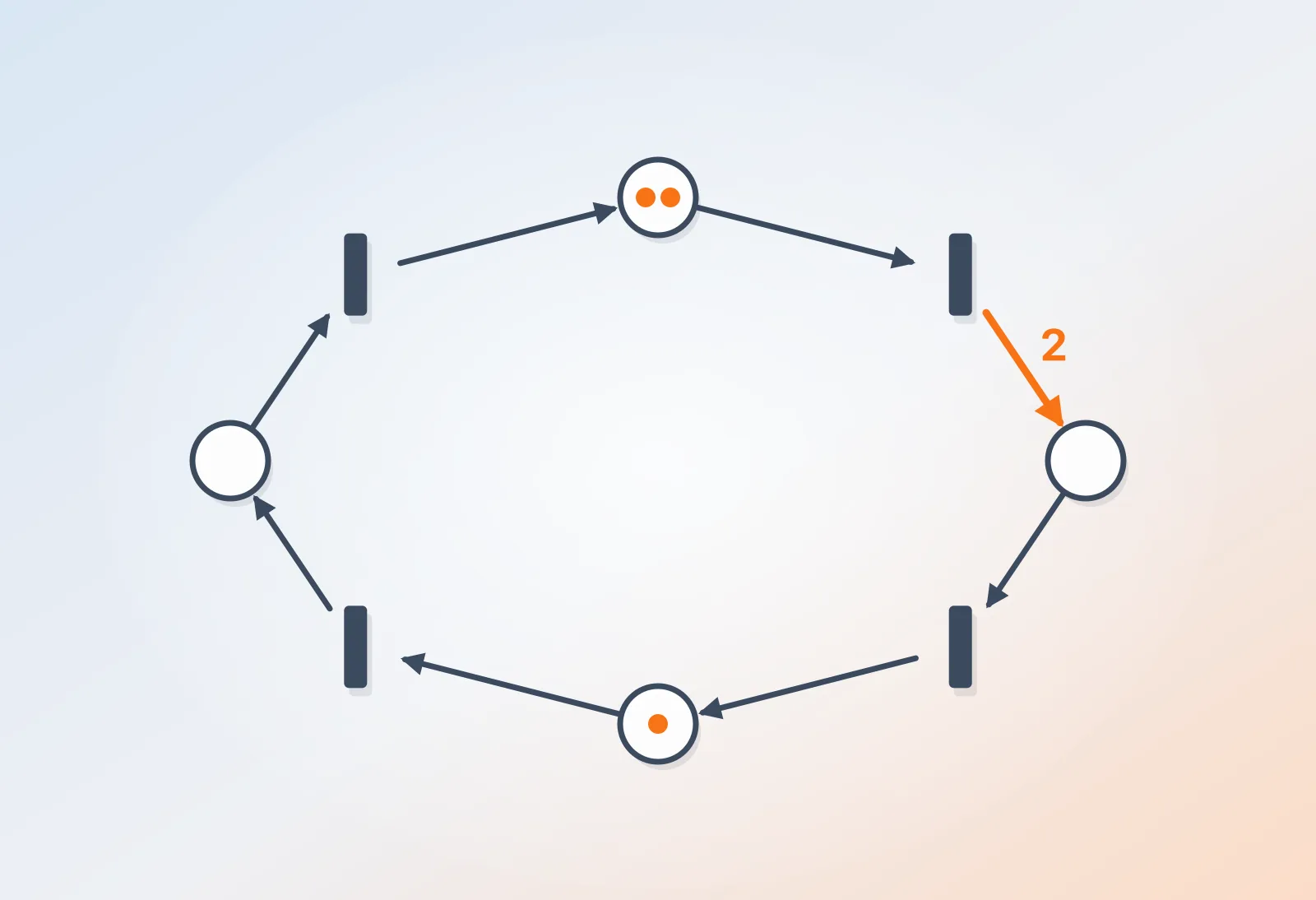
SDCPNs: A Common Language for Complex Systems
From plain Petri Nets to a unified representation of continuous and discrete behaviour, structured state, concurrency, and randomness

Inverse problems in Agent-Based Models
Technical challenges and relevance to a Process Foundation Model

How not to build a Process Foundation Model
Why classic AI model architectures fail to handle the unique properties of process graphs

Get new posts in your inbox
Get notified when new long-reads and articles go live. Follow along as we dive deep into new tech, and share our experiences. No sales stuff.
Deriving slugs from embeddings: vec2slug
Building a tiny transformer decoder to extract URL slugs from vector embeddings

HashQL: Research Preview
A hypergraph query language that supports multiple, independent time dimensions — enabling reasoning over how data evolves and when it was known

Announcing hgres
The graph data engine powering HASH is now available as a standalone layer


Embeddings as Encodings
Correctly conceptualizing and handling vectorization in knowledge graphs
Reviewing “State of the Art” in Agentic AI
Techniques to improve the performance of AI on complex tasks
AI PR Reviewer
Improving code quality and accelerating feature delivery with a homegrown AI-powered code reviewer
Design-Led AI
UX rules for building AI-powered professional tools

Collaborative data modeling
Allowing users to build a shared, structured understanding of the world

Multi-temporal versioning in Postgres
Implementing an n-temporal datastore from scratch atop PostgreSQL

File structuring using fractal trees
Scalable code organizing for large projects and monorepos


WebAssembly’s second-order impact on AI
What's new in Wasm and what it means for running large models client-side, in-browser

Block Protocol 0.3 and WordPress support
A new type system, link metadata, updated Core and Graph modules, and an ability to use Þ blocks in WordPress

Introducing Block Protocol hooks
Enabling applications to inject consistent, rich experiences inside blocks

Announcing error-stack v0.2
Introducing customizable outputs, related errors, multiple sources, and much more to error handling in Rust


Sensitivity analysis within HASH simulations
Identify conditions and variables that drive simulations towards unexpected outcomes
The block-paved path to structured data
How block-based interfaces can help us create more structured data on the web
De-commodifying the internet, block by block
Announcing Block Protocol version 0.2
Build blocks using any language
Ship a spreadsheet block by transpiling from F# to JavaScript

Announcing error-stack
A context-aware error library for Rust that supports arbitrary attached user data

The non-negotiable principle
The utility of hard constraints in product design